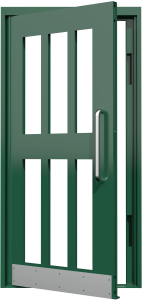
Choosing the best threshold for steel security doors noticeably impacts their performance, longevity, and compliance with building regulations. This often-overlooked component is vital in weatherproofing, accessibility, and overall security.
Keep reading to learn how to match threshold types to specific building requirements and make informed decisions that enhance steel door performance while meeting regulatory standards.
What is a Door Threshold and Why is it Important?
A door threshold (or door sill) bridges the gap between the bottom of a door and the floor, creating a seal at the base of the doorway. In commercial security applications, it prevents water ingress, reduces air infiltration, provides sound insulation, and enhances security by eliminating gaps.
The right threshold ensures that a steel security door performs optimally in all weather conditions and meets accessibility and security requirements. It directly impacts the durability and effectiveness of the entire door set.
What Types of Thresholds Are Available for Steel Security Doors?
The following threshold types exist for steel security doors, each designed for specific applications:
- Standard Thresholds: Basic raised thresholds provide weather protection and moderate security. For standard commercial applications, they typically project 12-15mm above floor level
- Low-Profile Thresholds: For accessibility compliance, rise no more than 6-8mm from the floor surface
- Automatic Drop Seals: Incorporate a mechanism that lowers a seal when the door closes and raises it when opened. Our M2M2 double doors can be fitted with these for enhanced performance
How Do Building Regulations Affect Threshold Selection?
Building regulations directly impact threshold selection through mandatory accessibility standards and fire safety requirements, with non-compliance risking failed inspections and legal issues.
Accessibility Requirements
The Equality Act 2010 and building regulations require that thresholds don’t create barriers to access. For commercial buildings, thresholds for accessible routes should not exceed 15mm in height, with level thresholds (under 6mm) preferred where possible.
Which Factors Should Influence Your Threshold Choice?
Your threshold selection should be guided by the following considerations: the door’s environmental exposure, security requirements, usage frequency, and the existing floor construction.
Door Location and Environmental Exposure
External doors facing severe weather conditions require robust thresholds with effective sealing properties:
- Exposure Direction – Doors facing prevailing wind and rain need enhanced protection.
- Building Height – Taller buildings experience increased wind pressures, requiring more robust sealing.
- Surrounding Terrain – Coastal locations may require marine-grade materials to resist corrosion.
- Temperature Differentials – Large differences between interior and exterior temperatures increase the importance of insulated thresholds.
- Potential for Water Pooling – Recessed entrances may require raised thresholds with enhanced water protection.
Security Requirements
For high-security applications, thresholds must complement the door’s security features, integrating seamlessly with the frame and floor to prevent leverage points. They should include concealed fixings to prevent tampering. Our M2M4 high-security doors include threshold options specifically designed to maintain security ratings.
Floor Construction and Finishing
The existing floor construction affects threshold installation:
- Substrate Type – Concrete floors require different fixing methods than timber or steel structures
- Floor Finishes – Carpet, tile, or vinyl influence threshold height and transition details
- Heating Systems – Underfloor heating requires consideration to avoid thermal bridges
- Floor Levels – Uneven floors may need adjustable thresholds to maintain proper sealing
How Do You Install and Maintain Thresholds Properly?
Correct installation and regular maintenance are vital for thresholds to perform effectively, preventing premature wear and maintaining the door’s security and weather resistance.
Installation Best Practices
- Ensure Precise Measurements – Measure the door opening width at floor level, accounting for irregularities.
- Prepare the Floor Surface – Clean thoroughly and ensure it’s level. Address unevenness with levelling compounds.
- Apply Appropriate Sealants – Use quality sealants compatible with threshold and floor materials.
- Secure with Proper Fixings – Use corrosion-resistant fixings appropriate for the floor material.
- Test Operation – Check door operation to ensure the threshold doesn’t impede proper function.
Regular Maintenance Requirements
Inspect quarterly for wear, damage, or seal deterioration. Check sealants annually and repair as needed. Clean debris from threshold channels and tighten loose fixings promptly. Lubricate moving parts of automatic drop seals according to the manufacturer’s specifications.
Enhance Your Security Doors with Bradbury Group’s Threshold Solutions
The right threshold improves steel security door performance, meets accessibility requirements, and provides important environmental protection. We offer comprehensive threshold options for all our steel doors, from entry-level M2MAC steel doors to our architectural communal entrance doors and panels.
Contact us to discuss your steel door threshold requirements and receive expert service today.